what's the difference

SATIVA VS HYBRID VS INDICA: WHAT’S THE DIFFERENCE?

The definition of sativa, hybrid, and indica have changed throughout the years. Initially, cannabis sativa and cannabis indica were plant science terms referring to plant genus and species. 

  • Cannabis Sativa L. described hemp plants found in Europe and western Eurasia, where it was cultivated for its fiber and seeds. 
  • Cannabis indica referred to the psychoactive varieties originating from the Hindu Kush mountains of India, where it was harvested for its seeds, fiber, and hashish production. 

Due to human migration, cannabis seeds were spread across the Middle East, Africa, and beyond where they developed distinct differences in their new, isolated homes. Each region where cannabis has grown natively or been uniquely cultivated has its own history and identifiable strains. These marijuana strains are known as Landrace strains and include Thai Stick, Acapulco Gold, and Hindu Kush. 

During this era of cannabis migration, the terms sativa and indica began to reference plant structures and features. A new plant classification was introduced in 1924 – Cannabis ruderalis. 

  • “Sativa” refers to tall, narrow-leaf varieties of cannabis, thought to induce energizing effects. 
  • “Indica” has come to describe stout, broad-leaf plants, thought to deliver sedating effects. 
  • “Ruderalis” plants are stalkier, with a smaller number of side branches and narrower palmate-shaped leaves, it’s naturally higher in CBD, and produces very little THC.

In the 1960s and ’70s cannabis breeders began transporting landrace strains and then bred them together to develop a wider range of genetic crosses. The motivations for this interbreeding stemmed from a desire for new effects, flavors, natural disease and pest resistance, larger yields, curiosity, or simply by accident. These crossbred cannabis strains created what we know as hybrid strains.

Indica leaf

Indica

Sativa leaf

Sativa

Hybrid leaf

Hybrid

Ruderalis leaf

Ruderalis

Today, the terms sativa, indica and cannabis hybrid are used less  to describe a plant’s physical features, but rather a plant’s effects on the user. This is because the majority of cannabis strains today are marijuana hybrids created as plant genetics are crossed time and time again.

So, when reading a marijuana dispensary’s menu it’s good to understand what they mean by sativa, hybrid, indica, and High CBD. 

What does cannabis sativa mean?

Sativas are believed to cause the “high” effects of cannabis. This is in reference to the head high and more euphoric effects. 

  • Invigorating, uplifting cerebral effects
  • Stimulates mind and senses
  • Improves focus/concentration
  • Increases energy
  • Uplifts mood

What does cannabis indica mean? 

Indicas are believed to cause the “stoned” effects of cannabis. This is in reference to the more physically and mentally relaxing effects like “couch lock”. A common saying to help remember these effects is Indica = In Da Couch. 

  • Physically relaxing and sedating
  • Relaxes mind and body
  • Relieves pain and nausea
  • Stimulates appetite
  • Reduces anxiety

What are cannabis hybrid strains?

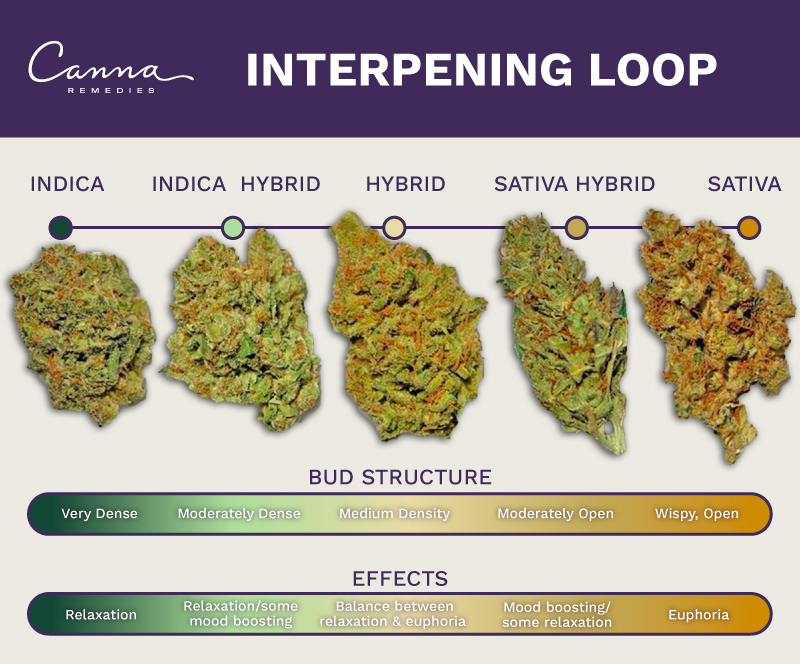
Hybrid refers to a mixture of effects due to crossing a variety of cannabis plant types. Hybrid strains have been categorized even further to sativa dominant hybrids and indica dominant hybrids. 

  • Sativa dominant hybrid – Balanced effect with mood boosting effects and some relaxing physical effects. 
  • Hybrid – Effects balanced between euphoria and relaxation
  • Indica dominant hybrid – Balanced effect with more relaxing physical effects and slight mood boosting effects and some.

What is CBD?

High CBD are cannabis products that contain an appreciable amount of CBD. CBD is often associated with hemp CBD that can be bought at your local markets or online CBD shops. However in cannabis dispensaries, they are often referring to products that contain over 5% THC and at least 10% CBD. This can be helpful for those looking for physical and emotional relief with extremely low potential for the head high. 
density-buds-scale graphic
strain-names

WHAT DO STRAIN NAMES TELL YOU ABOUT YOUR PRODUCT?

Modern cannabis names primarily began in the 1960s and ’70s when cannabis breeders began transporting feral marijuana strains from around the world – called “landrace strains.” These strains were then bred together to develop a wider range of genetic crosses. They are often given unique names that reflect their genetic lineage, appearance, aroma, flavor, or effects. These names are often created by breeders and enthusiasts to distinguish one strain from another and to convey specific characteristics or qualities of the cannabis plant. Below are some examples of how cannabis strains are named:

Genetics/Lineage

  • Cleverly combining the parent strains’ names: 
    • Critical Purple Kush = Critical x Purple Kush
    • Alien Dutchess = Dutch Treat Haze x Alien OG
    • Locomotion = Blue Diesel x Trainwreck

Attributes of the Strain

  • Physical traits:
    • Golden Goat
      This strain has a golden appearance close to harvest and an abundance of golden hairs/pistils.
    • Granddaddy Purple
      This strain has flowers that bloom in shades of deep purple with colorful purple leaves.
    • Cherry Diesel
      The harvest room smells like cherries when this strain is being grown.
  • Effects:
    • Strawberry Cough
      Higher content of the ocimene terpene in this strain makes you cough.
    • GG #4
      This strain is known to “glue you to your seat.”
  • Cannabinoid Content:
    • Otto
      This strain has a one to one (OTO) ratio of THC and CBD.
    • Harlequin
      Tis strain is named for the patchwork costume of a court jester, representing the patchwork of cannabinoids and terpenes in this particular strain. 

Paying Homage

  • Jack Herer
    This strain is named for a cannabis activist.
  • Ringo’s Gift
    This is named after a CBD-strain breeder.
  • Agent Orange
    This strain is named in tribute to a Vietnam veteran who passed away from cancer due to Agent Orange.

Temporal Significance

  • Pre-98 Bubba Kush
    This strain originated before the panic of the great Y2K catastrophe.

Although some strain names are tied to specific characteristics or qualities of the plant, certain names are selected seemingly at random, often holding personal significance for the breeder but carrying minimal or no relevance for the consumer.

While strain names provide a bit of insight into what a person can expect when consuming, they cannot be used to precisely understand the effect due to the multiple variations a strain has. Research has led to scientists finding a new way to categorize cannabis (apart from strains), they are Chemotypes and Chemovars. 

Cannabis chemotypes

Chemotypes are a way to categorize cannabis plants by their cannabinoid content. In New Jersey, it is required that products be labeled with their chemotype. 

  • “High THC, Low CBD,” where the THC to CBD ratio is greater than 5:1 and the total THC percentage is 15% or greater.
  • “Moderate THC, Moderate CBD,” where the THC to CBD ratio is between 5:1 and 1:5 and the total THC percentage is between 5 and 15%.
  • “Low THC, High CBD,” where the THC to CBD ratio is less than 1:5 and the total THC percent-age is less than or equal to five percent.

Cannabis chemovars

Chemovars categorize cannabis plants by their cannabinoid and terpene ratio, taking into consideration at least two abundant cannabinoids and the two, three, or four main terpenes found in cannabis plants. 

  • The chemovar approach requires a full chemical analysis to know exactly which cannabinoids and terpenes a plant contains in order to be able to divide them by their potential effects. This makes it hard to study and implement in most places due to cannabis being illegal and standardization varying from state to state. 
  • Scientists claim that categorizing by chemovar types is crucial in the cannabis industry in order for consumers to find products that best meet their needs.
what-forms

WHAT ARE THE FORMS OF CANNABIS?

Cannabis comes in many different forms making it extremely versatile for personal use. In the state of New Jersey, the following forms are legally allowable and available on our online menu:

Flower/Bud 

  • Bud 
  • Pre-rolls
  • Moon Rocks/Caviar

Concentrates

  • Dabs including waxes, shatters, badders, budders, sauces, crumbles, crystals
  • Oil extracts

Vaporized forms

  • Cartridges, pods, and disposable pens

Edible Forms

  • Dissolvables
    • Lozenges, sublabial forms (below the lip), sublinguals (under the tongue), and buccals (inside the cheek) 
  • Ingestibles
    • Pills, tablets, capsules, and chewables
  • Food Items 
    • Chocolates, gummies, baked goods, butters, jams, and jellies

Tincture

  • Including other liquid forms such as drops, syrups, oral suspensions, and drink enhancers

Topicals

  • Lotions, creams, calves, ointments
  • Transdermal patches 
  • Suppositories

Explore these different forms of cannabis to see what best fits your needs and if you have any questions you can always reach out to one of our knowledgeable Canna Coaches.

whats-in-cannabis

WHAT’S IN THE CANNABIS PLANT?

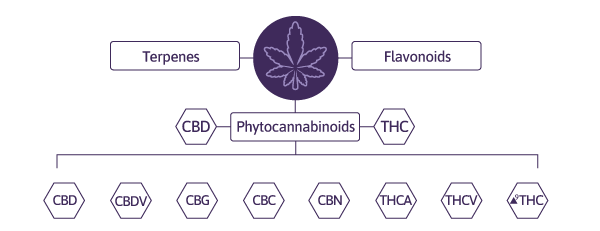
The cannabis plant contains a complex mixture of physiologically active compounds, with hundreds of different cannabinoids, terpenes, and other compounds identified to date. The two primary categories of compounds found in cannabis are cannabinoids and terpenes, which contribute to the plant’s various effects and characteristics.

Here’s an overview of the main components:

  • Cannabinoids: These are the most well-known and studied compounds in cannabis. They interact with the body’s endocannabinoid system, which plays a role in regulating various physiological processes. The two most abundant and well-known cannabinoids in cannabis are THC & CBD. 
  • Terpenes: Terpenes are aromatic compounds found in many plants, including cannabis. They contribute to the plant’s flavor and aroma and also have therapeutic effects. Some terpenes found in cannabis include myrcene (with a musky scent), limonene (with a citrus scent), and pinene (with a pine scent). Terpenes influence the overall effects of a particular cannabis strain.
  • Flavonoids: Flavonoids are a group of phytonutrients found in cannabis and other plants. They have antioxidant and anti-inflammatory properties and may contribute to the plant’s overall therapeutic potential.
  • Sterols: Phytosterols are a class of plant-derived sterols that are present in various plant species, including cannabis, and they serve several important biological functions in plants. One of the primary functions of phytosterols in plants is to help regulate the fluidity and permeability of cell membranes. β-sitosterol, campesterol, and stigmasterol are phytosterols that have been studied for their potential health benefits in humans when consumed as part of a balanced diet. They are known to have cholesterol-lowering properties and may contribute to heart health. While they are not typically the primary focus of cannabis research or use, they are part of the plant’s overall chemical composition and may have subtle effects or contribute to the entourage effect, where multiple compounds work together to produce the plant’s overall effects. 
  • Other compounds: Cannabis contains a wide range of other compounds, including fatty acids, proteins, and various minerals and vitamins.

The specific composition of these compounds can vary significantly among different cannabis strains, which is why different strains produce different effects. The cultivation and breeding of cannabis have allowed for the development of strains with varying cannabinoid and terpene profiles to cater to different preferences and therapeutic needs.

The synergy of these plant components working together to produce a combined effect that is greater than the sum of their individual effects is called the entourage effect. The entourage effect suggests that using whole-plant cannabis extracts or consuming cannabis in its natural form may provide a broader spectrum of therapeutic benefits compared to using isolated compounds. This has significant implications for the use of cannabis for both medical and recreational purposes, and underscores the importance of considering the whole-plant context when studying or using cannabis.

The Entourage Effect

entourage-effect-diagram
what-is-cannabis

WHAT IS CANNABIS?

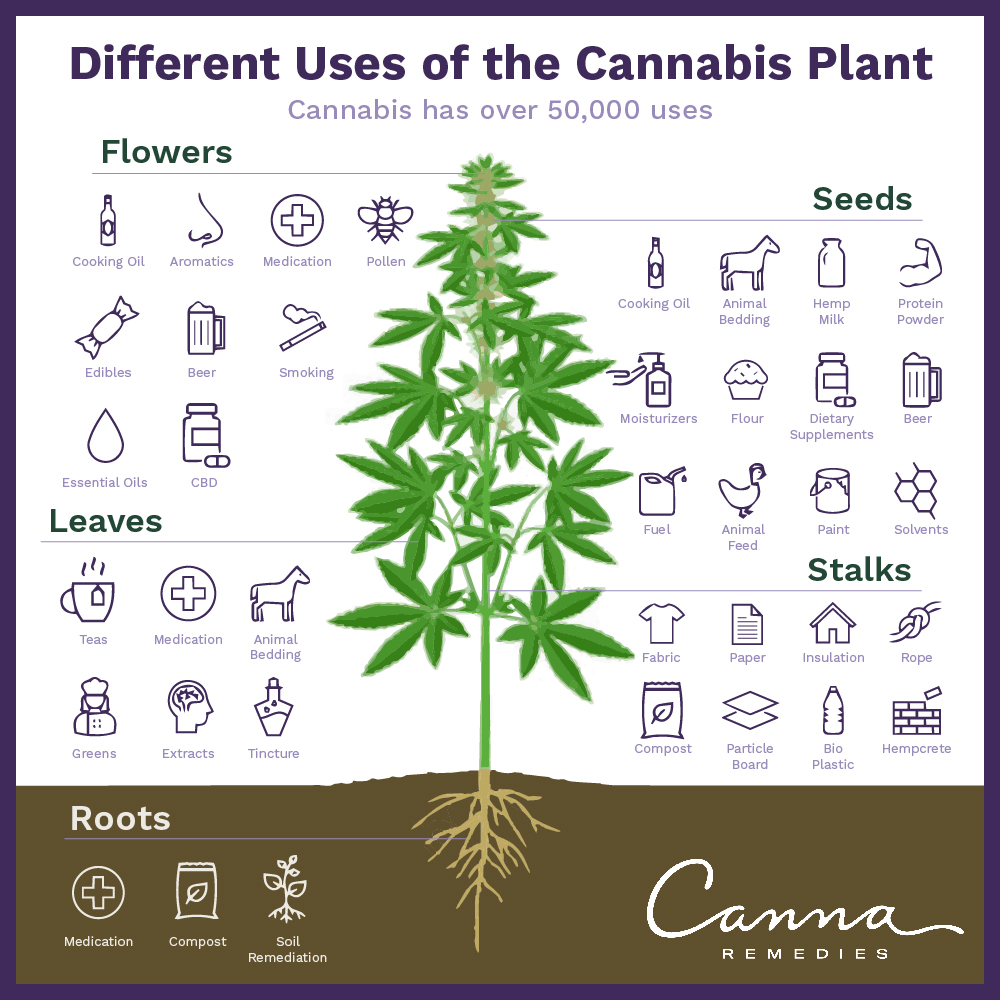
Cannabis, commonly known as marijuana or weed, is a plant that has been used for various purposes for thousands of years. It is one of the most widely cultivated and consumed psychoactive substances in the world. Throughout history, cannabis has been utilized for its psychoactive effects, served as a fiber source for textiles, and contributed seeds and oil for both food and industrial applications. Medicinally, it has been employed to address ailments like pain, nausea, and muscle spasms. Ongoing research is actively exploring the potential medical applications of cannabis, adding depth to our understanding of its diverse properties.

Cannabis is a genus of flowering plants that includes several species, with the most well-known being cannabis sativa and cannabis indica. In many parts of the world, cannabis has a long history of recreational use, and its legal status varies widely. Some countries and states have legalized or decriminalized cannabis for both medical and recreational use, while in other places, it remains illegal.

Cannabis is typically consumed in various forms, including smoking the dried marijuana flowers or leaves, vaporizing, or ingesting it in edible products such as brownies or cannabis gummies. The use of cannabis can have both short-term and long-term effects on physical and mental health, and its safety and legality continue to be subjects of debate and research in many parts of the world.

Different Uses of the Cannabis Plant

canna-plant-uses graphic
Product has been added to your cart